
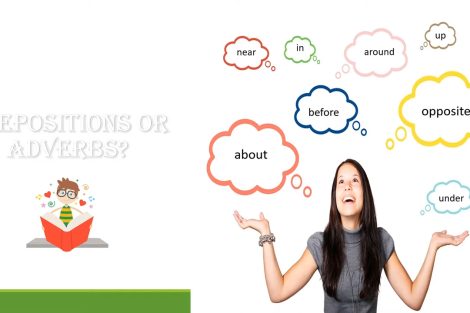
We all get confused when we think about prepositions. This lesson will help you to understand the difference between prepositions and adverbs. A preposition is a word used to link nouns, pronouns or phrases to other words within a sentence. An adverb is a word that describes a verb and it is usually used for places, time, circumstance, manner, cause and so on. IMPORTANT: The most important thing we have to remember is that a preposition requires an object, while an…
Lecții de limba engleză
Aprofundarea cunoștințelor de limba engleză – moduri creative, care îmbină educația cu distracția
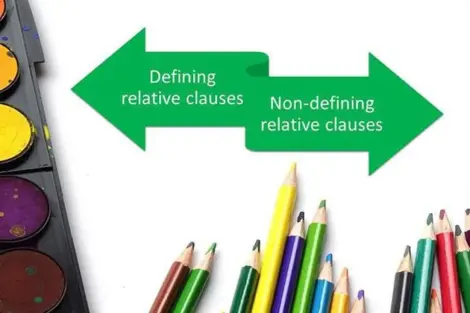
Defining and non-defining relative clauses
A. Defining relative clauses Defining relative clauses are used to give information about someone or something (a noun) – information is essential to understand what or who is being referred to.The noun + relative pronoun + the defining relative clause. The relative pronouns are: who, that, which, whose, whom.They introduce a defining relative clause this way: • They are the people who want to rent our flat. • We should give the money to somebody who needs the treatment…

Stative Verbs
Stative verbs usually describe states (not actions) and they are not used in continuous tenses (like the present continuous, or the future continuous). These verbs can express: Possession: belong to, have, own, possess This pen belongs to my brother. They have 2 beautiful kids. I own a house and an apartment in Florida. My parents possess an expensive car.
Determiners: neither, either, most, much, many…
Just a little about neither of, neither, either, many, much or a lot of... Neither of my parents can use a computer. (verb affirmative, of + noun in plural). Neither of them goes to work. (verb affirmative, of + pronoun in plural).
The place of „also” in a sentence
Grammatically, "also" can stay in different places in a sentence and be correct, but... the place of "also" is important regarding the meaning and the emphasis of the sentence. The purpose of also is to join two ideas. Let's say the first idea is that "I think something"
How do you conjugate the verb? Plural / singular?
Plural or singular? The subject expresses how many people? One person or … Mother and father have gone to the market. The cat and the dog do not love each other. My teacher and friend is a wonderful person. The team leader and the deputy were against the new project. Each person has rights. Each child brings huge value to the family. Neither Jane nor John has passed the exam. Either Mom or Dad has called you. Neither Grandpa nor…
Adjectives with prepositions
Prepositions usually appear after adjectives to help the adjective to describe ideas or emotions. The preposition is typically followed by a noun or gerund to form a prepositional phrase. 1. Adjective + about – this pair expresses feelings caused by specific situations or events. Examples: angry about She is angry about the noise from the neighbours. furious about The man was furious about waiting in the rain all night. mad about
To or For
We use TO when we talk about a destination, what time it is, a distance - final point, when we compare something, when we give or explain something to someone and when we express a reason of an action, a purpose given with a verb. I am going to Berlin It’s ten minutes to twelve There are 2 km from the center of the town to the stadion. I always prefer meat to cheese. I offered some beautiful flowers to my teacher. I called to hear your voice.