

May si Might + Present Perfect - Cand folosim may + present perfect? Cand presupunem ca ceva s-a intamplat in trecut: Mother is not home, she may have gone to the supermarket. Daca, insa, ne referim la ceva ce ar fi putut sa se intample, dar nu s-a intamplat, atunci folosim MIGHT + Present Perfect
Lecții de limba engleză
Aprofundarea cunoștințelor de limba engleză – moduri creative, care îmbină educația cu distracția

Eveniment important – Sedinta Unica
Timpurile limbii engleze - English Tenses Toate timpurile prezent, toate timpurile trecut si toate timpurile viitor Va invitam duminica, 12 mai, ora 12:30 la un curs de trei ore de limba engleza in care vom aborda toate timpurile gramaticale ale acestei limbi, le vom grupa si analiza cu exemple si structuri astfel incat, la finalul celor trei ore, va veti fi limpezit tot ce va doreati pe aceasta tema. Pretul acestei sedinte unice este de 75 de lei.

Quantifiers
SOME, ANY, NO “Some” se foloseste in propozitii afirmative si pentru substantive numarabile si pentru cele nenumarabile (is used in affirmative sentences with countable and uncountable nouns.) some = cateva, niste, o cantitate oarecare de… I bought some milk to drink in the morning. = Am cumparat niste lapte pentru a bea dimineata. “Any” este de asemenea folosit cu substantive numarabile si nenumarabile dar doar pentru propozitiile negative si interogative (it is also used with countable and uncountable nouns but…
Make off and make of
Make off si Make of - aproape la fel, dar cu semnificatii total diferite: Make off - a se grabi sa plece, a scapa, a evada - se foloseste cand cineva a furat ceva si vrea sa scape: The burglars made off in their car when they heard the police.
May well sau may as well
1. May well exprima o probabilitate foarte mare: He thinks he may well take a very big mark at the exam, he has been studying for two years. It's freezing, they may well close the schools for a few days.
Three-Word Phrasal Verbs (Transitive)
In articolul de astazi va vom prezenta ultima parte din categoria „phrasal verbs”, mai exact verbele care creaza expresii folosind doua prepozitii. With the following phrasal verbs, you will find three parts: break in on (interrupt = a intrerupe) My father broke in on our conversation little time after we started it. catch up with (keep abreast = a pune la curent cu, a tine pasul) After a long trip, it was time to catch up with my friends. check…
Intransitive phrasal verbs
In articolul de astazi vom vorbi despre „intransitive phrasal verbs”, acele verbe cu prepozitii care nu sunt urmate de un complement: (The following phrasal verbs are not followed by an object): break down (stop functioning = a se strica) My car broke down in the desert and I waited 10 hours for someone to help me. catch on (become popular = a deveni popular) That video game caught on. Every child is playing it! come back (return to a place…
Separable Phrasal Verbs 3
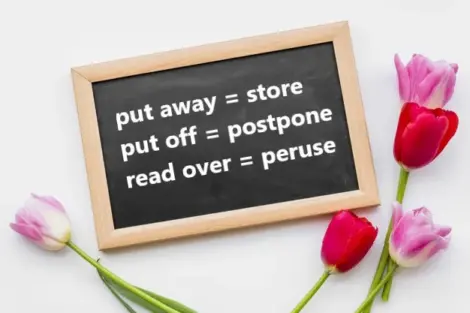
In articolul de astazi va vom prezenta ultimele exemple cu “separable phrasal verbs”: pick up (lift something off something else = a ridica) I’ve already asked the children to pick their toys up from the floor. put away (save or store = a economisi) We put money away for holiday. put off (postpone = a amana) My boss cannot arrive to the meeting today. Can we put it off until tomorrow? put on (put clothing on the body = a…