
Verbs: build The manager decided to build a brand for the business. complete Have you completed your CV yet? You have to send it soon. consider I haven’t considered him as a real specialist! develop We have to develop new products to maintain the company on the market.
Lecții de limba engleză
Aprofundarea cunoștințelor de limba engleză – moduri creative, care îmbină educația cu distracția
A few essential business verbs and nouns Part III
Verbs: advise The lawyer advised us about Education policy. avoid Try to avoid conflict at workplace, please! break If you want to work here, follow the rules, don’t break them! Our partner broke his word and resigned. cancel They had to cancel tomorrow’s meeting because they lost the flight.
A few essential business verbs and nouns part II
Verbs: accept I accept full responsibility for my decisions during our collaboration. admit Airline companies admitted last week that the pandemic crisis is affecting business travel. borrow My company had to borrow the money from the bank for the new equipment. calculate

A few essential business verbs and nouns PART I
Verbs: advertise It is going to be very expensive to advertise our products on TV. afford Our sales have been down this year – we can’t afford hiring new people. approve We have to wait weeks for the Urban Planning Department to approve our project. authorize
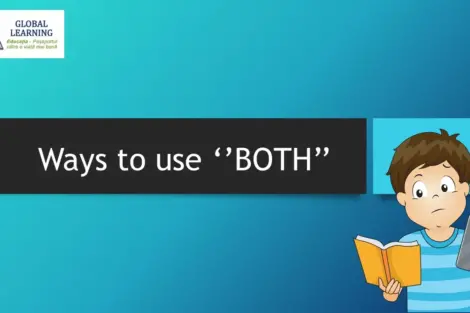
Ways to use ‘both’
Both can be used in many ways: to refer to two things or people together: Both these books were sold. (The two books were sold.) Are both your parents ill? (Are your mother and father ill?) with nouns Both or both of + determiner + noun Determiner: a/an, the, my, his, her... I know both his parents. They are good people. (or … both of his parents.)
Connectives and Linking Words
Here is a list of the most common connectives and linking words: although Although it was a beautiful place, the tourist didn’t like it. as a result The temperature is higher in the summer as a result of global warming. as long as You can borrow my car as long as you take good care of it. as well as
The verb PAY and some phrasal verbs with PAY
DEFINITION We pay when we give money in exchange for something we buy, goods or services. Examples: I’ll be paid at the end of the month. How much did you pay for this beautiful suit? I pay my taxes every year. Conjugation: present simple: pay, pays
Above or over?
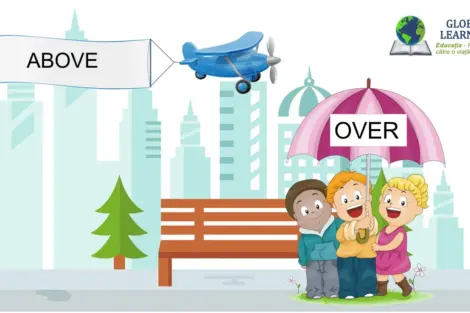
Above and over can be used as adverbs or prepositions. Both of them express ‘higher than’, but there are some differences: as preposition, we use above when something is at a higher position, but it doesn’t touch a person or an object, there is no contact between them. Example: I see a plane above the city. as preposition, over has a similar meaning, but expresses that a higher object covers or even touches a lower object, so there is a…